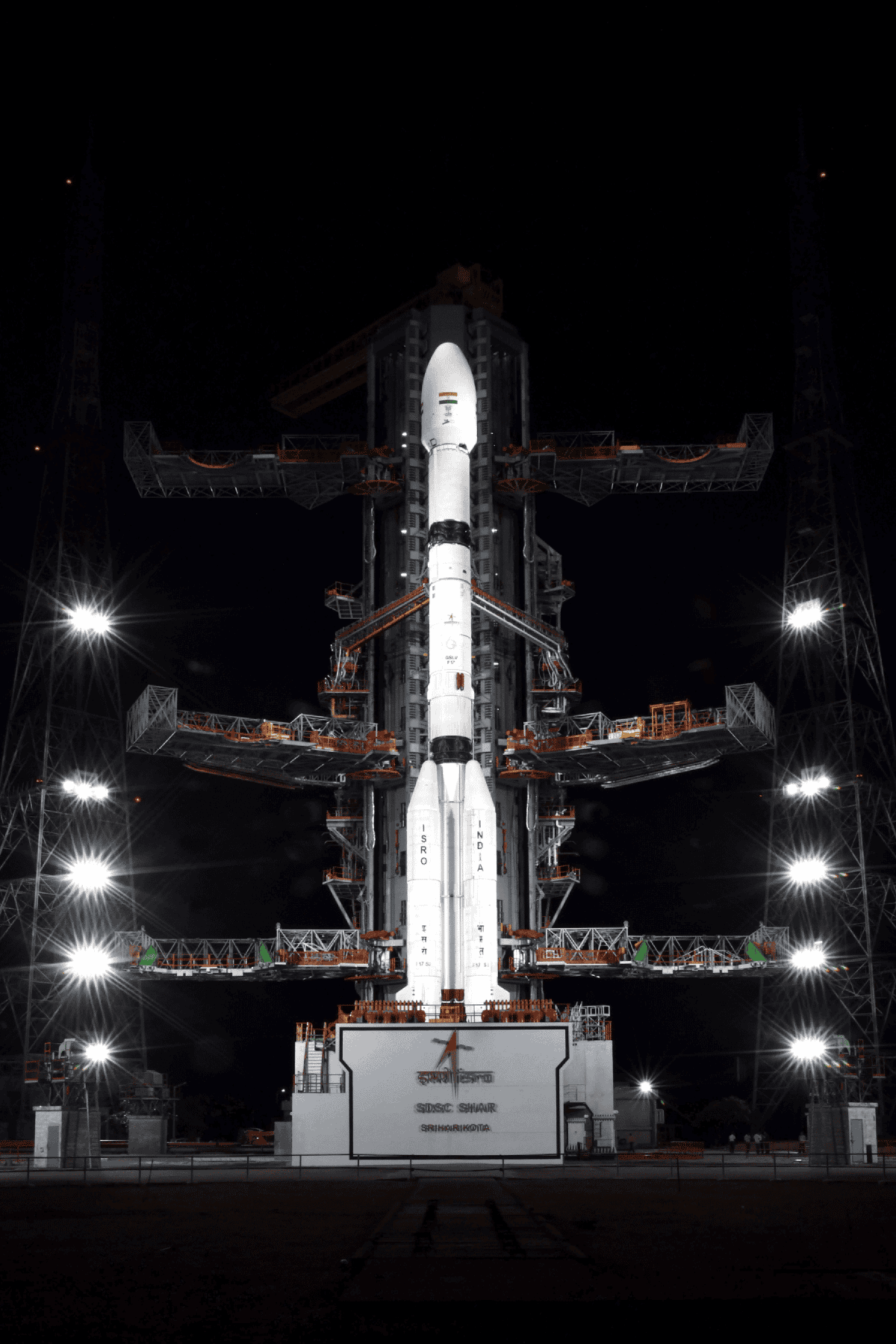

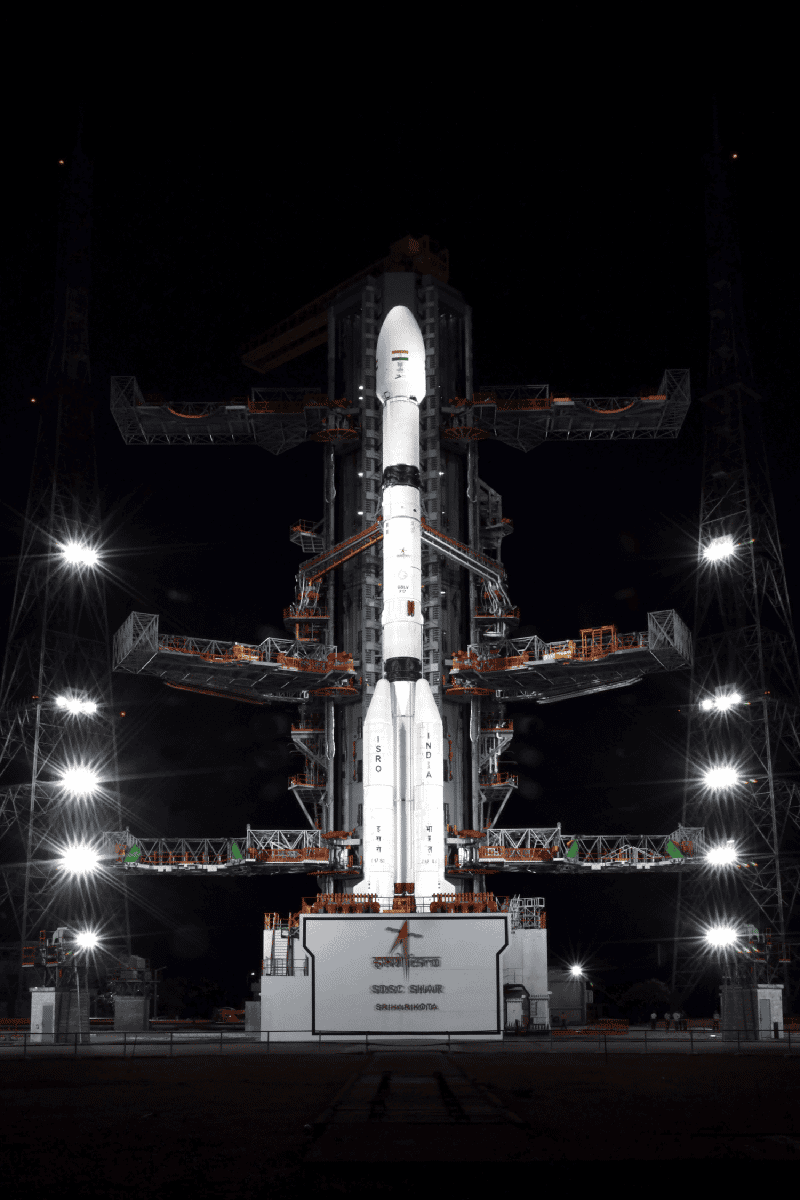
Based on the previous launches of the GSLV rocket into Geostationary Transfer Orbit (GTO), observers from East Malaysia might have the chance to see the GSLV F17 rocket flight to launch an Earth observation satellite, EOS-05/GISAT-1A, into GTO.
Post-launch data#
Location and altitude#
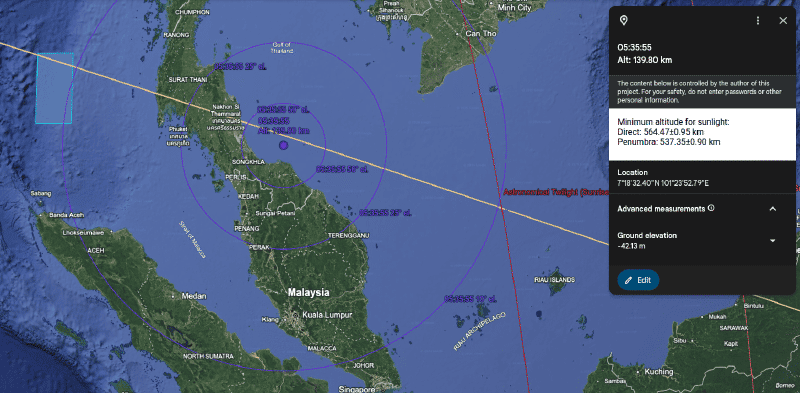
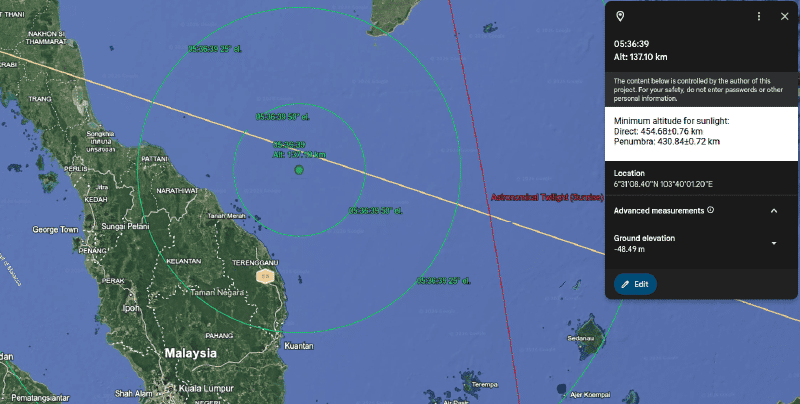
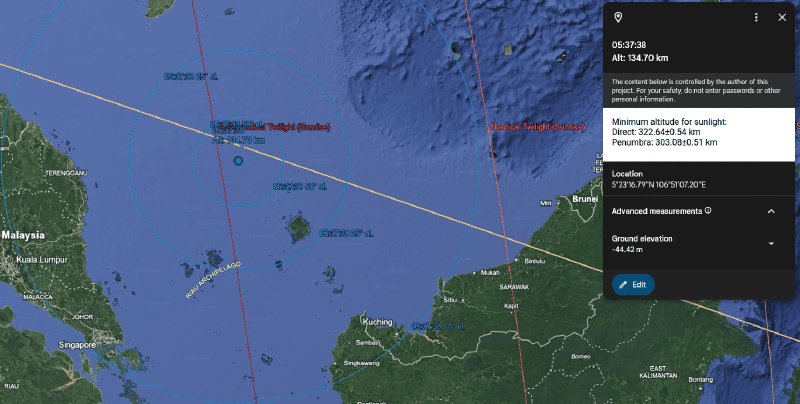
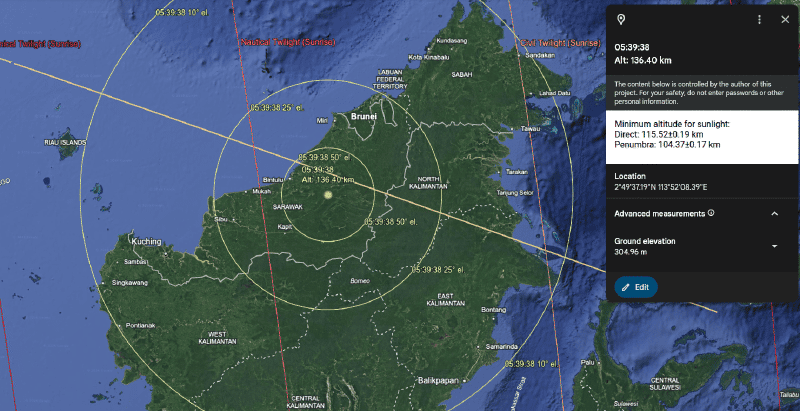
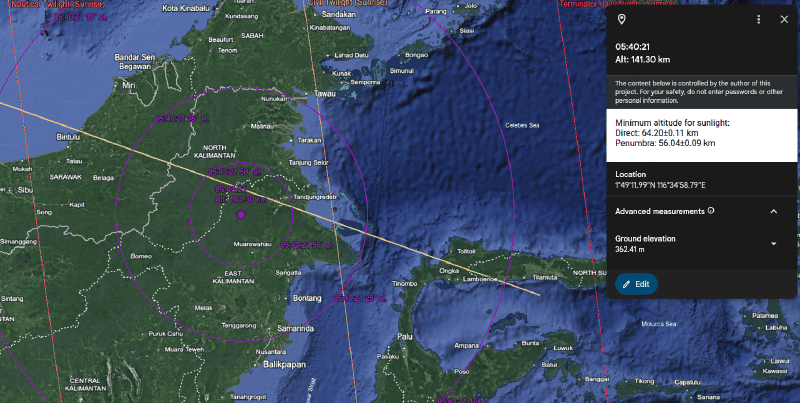
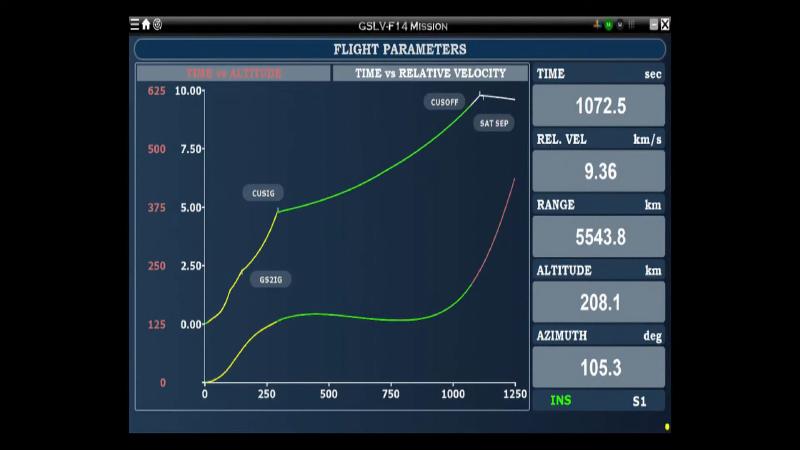
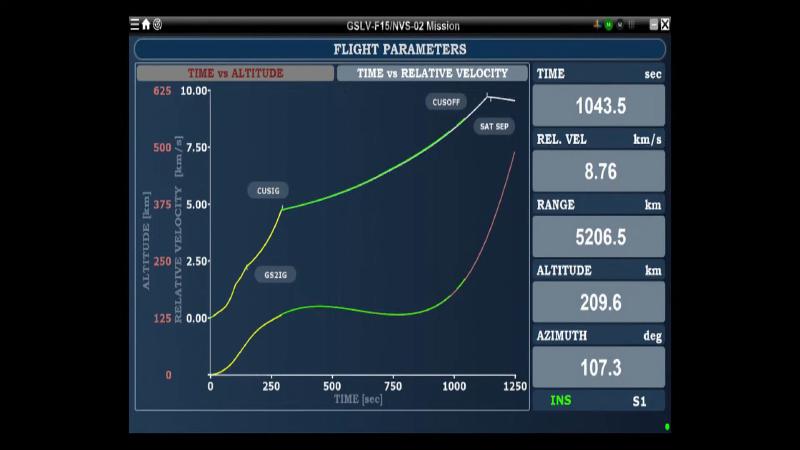
The images below show the rocket’s position and altitude at various timestamps, based on data from the live stream coverage.
The images also indicate the minimum altitude required for the rocket to be sunlit at each coordinate.
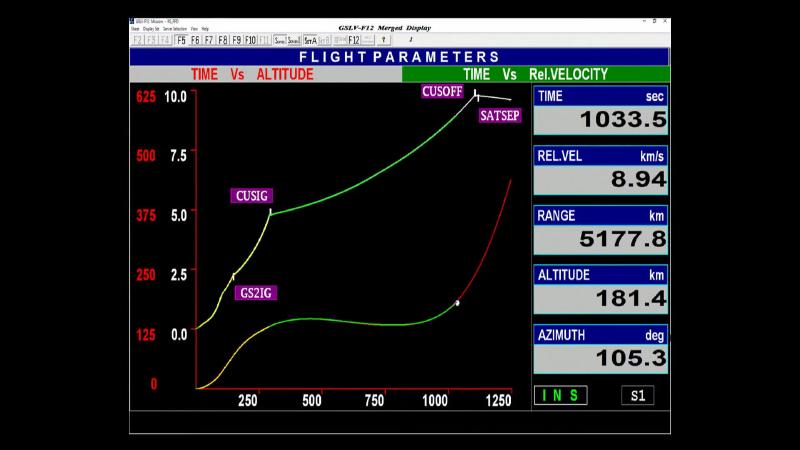
Altitude over time chart#
Launch countdown#
At the time of writing, the launch is scheduled for Friday, September 4, 2026, 5:25 AM Malaysia time1.
Confidence Level#
★★★☆☆ (East Malaysia)
Factors:
- Launch trajectories from previous GSLV missions into GTO are well-documented in past live streams, giving us a solid estimation baseline.
- The live broadcast is expected to provide detailed trajectory data, making it easier to track the flight path in real time.
- The third-stage engine (GS3/CUS15) burn lasts for an extended duration, meaning the rocket will be actively firing as it passes near or over Malaysia.
- However, EOS-05/GISAT-1A is expected to be among the heaviest payloads launched into GTO by a GSLV Mk II so far, which may cause slight trajectory deviations compared to previous missions.
- To be sunlit and visible to observers when passing over or near Sarawak, the rocket must reach an altitude of at least ~135 km.
- As the rocket passes south of Sabah, it will still be at a lower altitude of around 140 km, placing it fairly low on the horizon for observers in southern Sabah.
Flight visibility estimations#
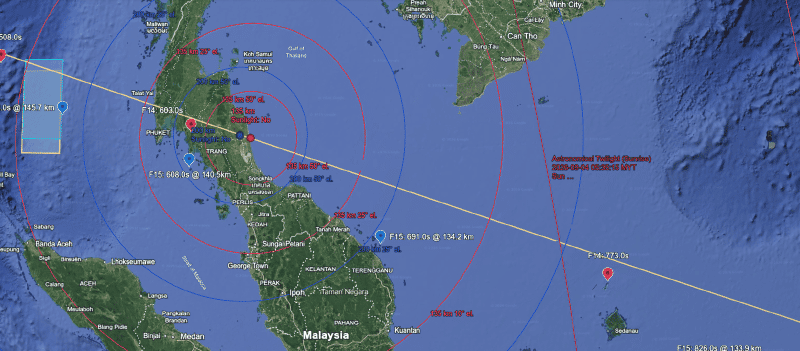
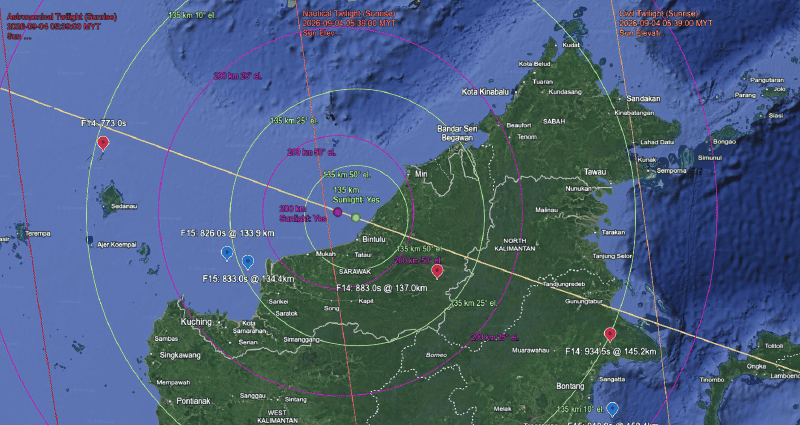
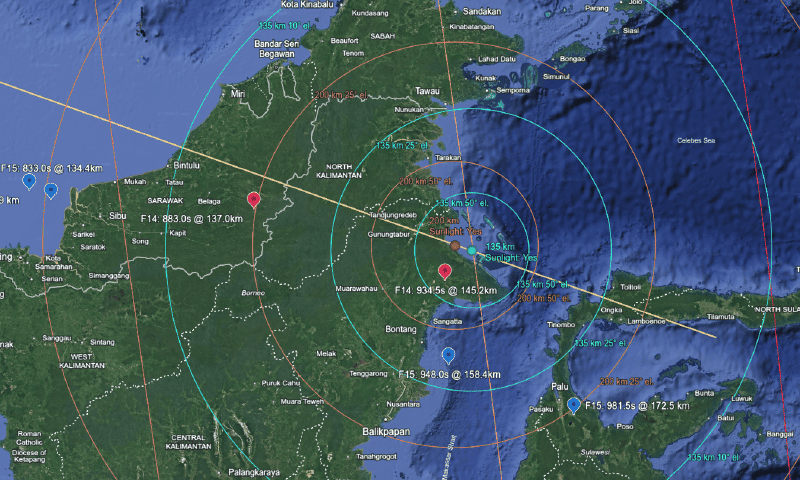
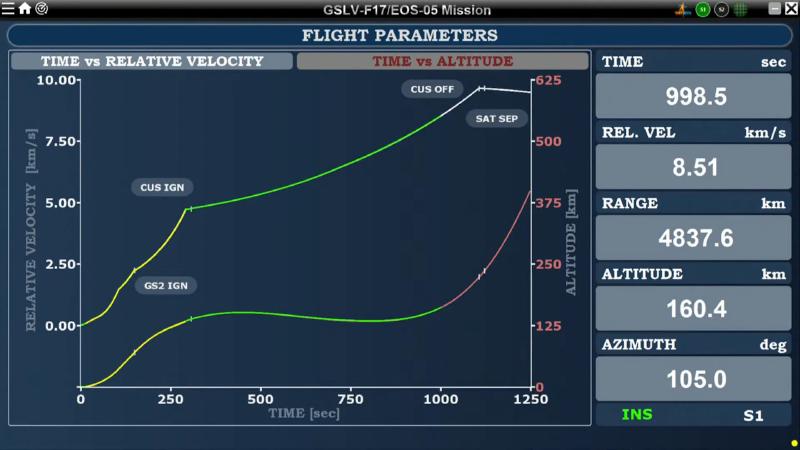
Chart: Altitude over time from previous launches#
Watch live launch coverage: ISRO#
These are manual predictions based on public data and may contain inaccuracies.
To view the rocket pass, the following conditions must be met:
Dark and Clear Skies: It must be dark with clear skies at the observer’s location.
Sunlit Rocket: The rocket must be high enough to catch sunlight.
Active Firing or Fuel Dump: While passing overhead, the rocket must be doing either of the following:
Engine Burn: The rocket engine is actively firing.
Passivation / Fuel Dump: The rocket stage is dumping leftover fuel at the end of its mission (this is generally fainter and harder to spot than an engine burn).
Cover image: ISRO